
Skip garage door prep this time of year and the bill usually shows up in January, not October. A door that's been swelling and sticking all summer doesn't fix itself once the weather cools — it just keeps straining the opener motor until the gears burn out, or the track misalignment finally lets the door jump off its rollers on a cold morning when you're already late for work. A rusted spring that's been quietly weakening since the last downpour can snap without warning, and in a county where garage doors are built to meet wind-load requirements, a door that's already compromised from months of humidity isn't going to perform the way it's supposed to if a late-season storm rolls through. The good news: most of this is preventable with an hour of attention now, before the real cold snaps and the next round of wet weather arrive.
What a Florida Hurricane Season Leaves Behind
Months of heat, humidity, and afternoon downpours take a toll that isn't always obvious until the weather shifts. Wood and composite panels absorb moisture and swell, which is why doors that closed fine in June suddenly scrape or bind against the frame in October. Metal tracks and hardware exposed to repeated wet-dry cycles start to rust, especially fasteners and spring coils that don't get wiped down. Storm debris — leaves, grit, pollen residue — works its way into tracks and rollers, turning what should be a smooth glide into a grinding, jerky motion. None of this is dramatic on its own, but stacked together it's exactly the kind of wear that causes a spring to fail or a motor to overheat once temperatures drop and metal contracts.
Why Cooler Weather Changes the Equation
Winter in this part of Florida isn't brutal, but the temperature swings between warm afternoons and cold nights matter more than people expect. Metal springs and hinges contract slightly in the cold, which changes tension on components that have already been stressed by months of humidity. A spring that was marginal in September can fail outright during the first real cold snap. Lubricant that worked fine in summer heat can thicken or gum up in cooler temps, which is part of why doors that ran quietly all year suddenly start squeaking or hesitating. This is also a good window to catch small issues before they become spring-tension failures or off-track incidents, since cooler, drier days make it easier to actually see rust, cracked weatherstripping, and worn rollers that humidity and glare can hide.
A Practical Pre-Winter Checklist
- Inspect the springs. Look for rust, gaps between coils, or visible stretching. Don't touch or adjust them yourself — they're under heavy tension and a failed spring is one of the more dangerous DIY mistakes.
- Wipe down and lubricate hardware. Use a silicone-based lubricant (not WD-40, which attracts grit) on hinges, rollers, and tracks. This undoes a lot of the summer's humidity damage in one pass.
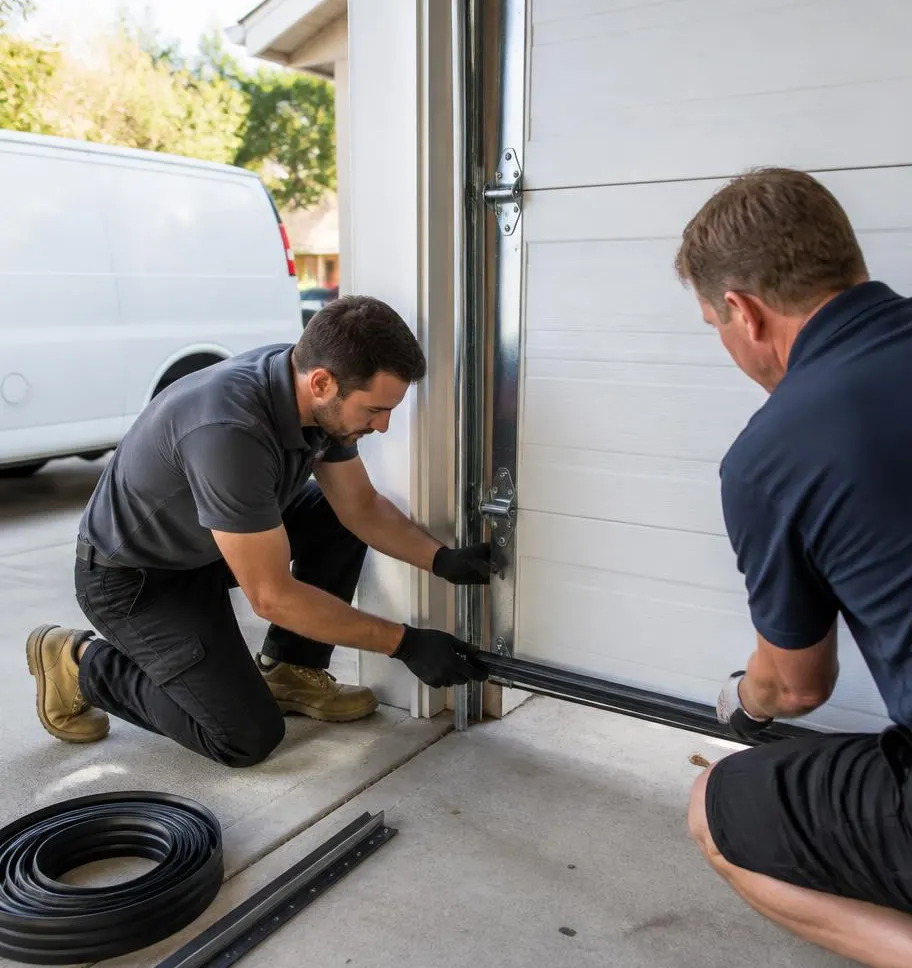
- Check the weatherstripping along the bottom and sides. Afternoon downpours and swelling panels often crack or compress the seal, which lets cold drafts and moisture into the garage all winter.
- Clear the tracks of storm debris. Leaves, dirt, and grit from months of wind and rain settle into the track channels and cause the door to bind or run off-center.
- Test the auto-reverse safety feature. Place a block of wood in the door's path and close it — it should reverse on contact. This is worth checking seasonally, not just when something seems off.
- Tighten loose hardware. Vibration from regular use loosens bolts and brackets over time; a quick pass with a wrench prevents rattling and misalignment.
- Check the opener's force settings. If the door has been struggling against swollen panels all summer, the opener may be straining harder than it should, which shortens its lifespan.
When to Call In a Technician
Some of this is DIY-friendly; spring tension and off-track doors are not. If you notice gaps or rust on the springs, hear a loud bang (often a sign a spring has already snapped), or the door is sitting crooked or jumping in the track, that's the point to call Monticello Garage Door Experts. We handle garage door spring repair and off track door repair regularly this time of year, precisely because months of humidity and storm wear tend to surface as the weather cools. If your door has been sticking, swelling, or straining the opener all season, a garage door maintenance & tune-up now is the cheaper fix compared to an emergency call once a cold snap pushes a weak component past its limit.
If your garage door has been fighting you since summer, don't wait for a cold morning to find out how bad it's gotten. Call Monticello Garage Door Experts today and get your door squared away for the season — proudly serving Monticello, FL and all of Jefferson County.